Ashley Miller – November 2024
Johanne Saint-Bien was four months pregnant when she paid Columbian smugglers to coordinate her 4,000-mile journey from the outskirts of the Amazon to the U.S.-Mexico border. The harrowing two-month trek entailed traveling by truck, bus, ferry, and foot through twelve countries.
Today, Johanne, a Haitian-Brazilian refugee, lives with her 10-month-old son at The Row, a 28-story, 1,300-room hotel-turned-shelter in Midtown Manhattan.
In October 2023, New York City Mayor Eric Adams announced a 60-day stay limit for refugee families living in the sprawling shelter system. This leaves Johanne and her baby boy, Bidenly, named in honor of the current president, facing homelessness in the middle of winter as their 60-day limit expires on January 3rd.
“We don’t have anywhere to go,” she said, looking down at her squirming son wrapped in winter wear. “Will Biden let Bidenly sleep on the street?”
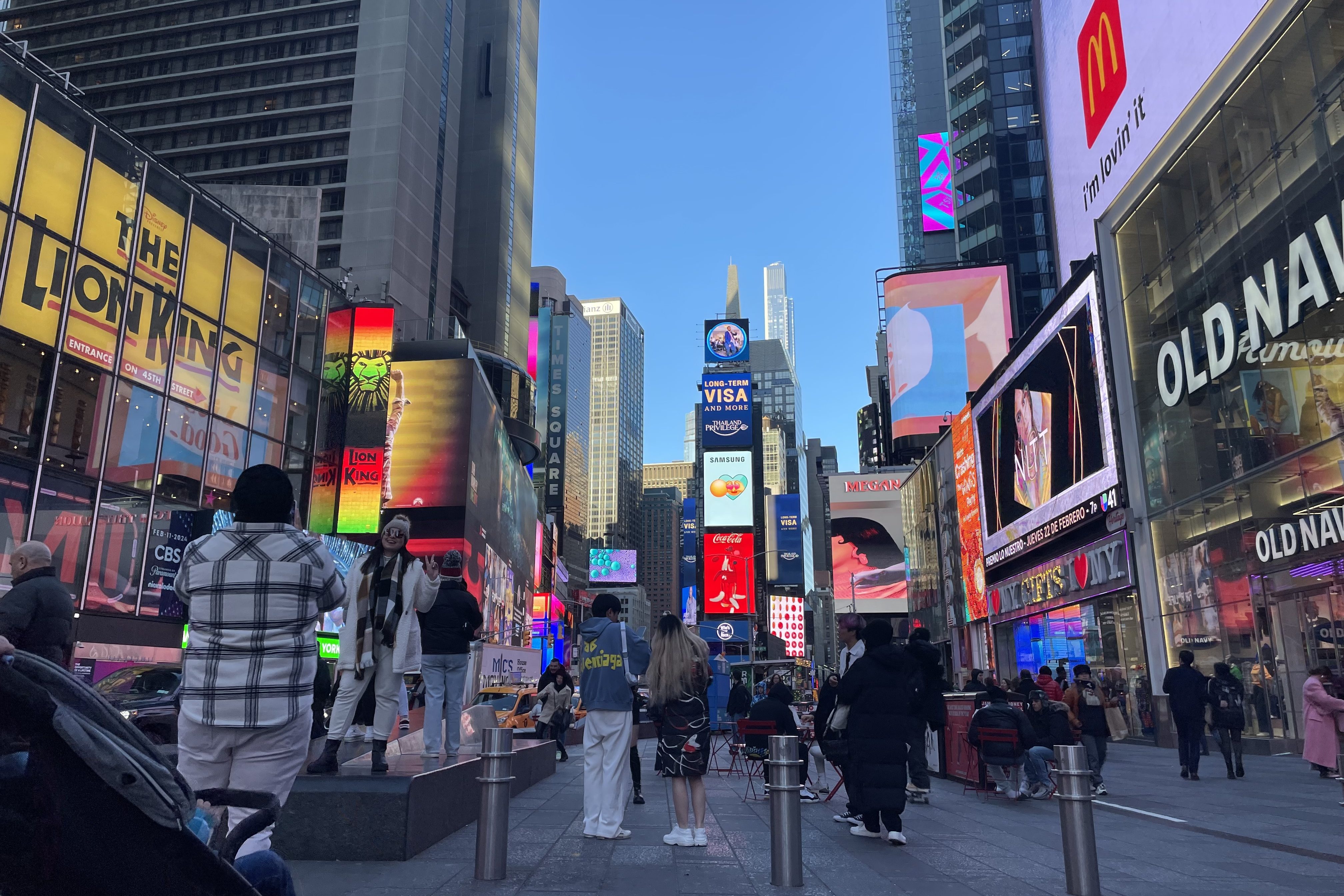
Johanne’s current neighborhood borders Times Square, often called “The Crossroads of the World.” The irony of the area’s epithet is not lost on Johanne, 27, who has literally walked across continents via the sole overland pass connecting South and Central America: the Darién Gap.
Since the Spring of 2022, some 145,000 women, men, and child refugees have arrived in New York City, according to city officials. Nearly 65,000 of the new arrivals live in one of the city’s 206 makeshift shelters across the five boroughs.
Like most of the arrivals, Johanne is eager to find work and leave the city’s care. Ten months ago, in March 2023, she applied for her employment authorization documentation (EAD), informally known as a ‘work permit.’ However, she has not received an update, meaning she cannot legally work.

Every day, Johanne scrolls through Next Door, a neighborhood-based social media site, looking for under-the-table job opportunities while her son plays in a non-profit daycare down the street. She has heard of women finding work as nannies and house cleaners on the site. However, she said, the market is competitive because women are willing to work for next to nothing.
Immigration advocates, city officials, and elected leaders condemned Adams’ announcement. “Forcing them to leave and reapply for shelter after 60 days will only mean more disruption, anxiety, and homelessness as winter approaches,” New York City Comptroller Brad Lander said.
Adams defended his decision, saying the policy “is the only way to help migrants take the next steps on their journeys.”
In Brazil, Johanne lived in a remote region of the Amazon with her parents, her brother, and his wife and daughter. Her family was part of a large wave of Haitian refugees who had arrived in Brazil in the early 2000s fleeing gang violence. “Haiti will always be my home,” Johanne said.
Johanne learned she was pregnant during her first semester of nursing school. The baby’s father had another girlfriend and, upon hearing the news, threatened Johanne. “He told me, ‘I want nothing to do with you,’” she recalled between tears. He demanded Johanne get an abortion, a plea echoed by her parents. “I wanted to die. I wanted to die,” she said. Johanne attempted suicide twice. The second time, she intentionally drove into oncoming traffic.
Johanne’s brother intervened, telling her death was not the answer. Johanne and her brother, whose name was redacted at his request, knew friends who had received their green cards in America. They promised to let Johanne, her brother, and his wife live with them in the United States.
Johanne’s parents were sure she would not survive the route to the border and mocked her for even trying. “I risked my life because I did not have one,” Johanne says now.
Johanne singled out her seven days in the Darién Gap as the most dramatic and emotionally tolling portion of her two-month journey north. The Gap, a 60-mile stretch of lawless jungle connecting Columbia and Panama, is a looming obstacle for refugees en route to the border, many of whom are ill-prepared or unaware of the dangers within the perilous overland pass, historically used by drug-smuggling cartels.
“You can’t imagine,” Johanne said, trying to find the words to describe her experience.
The roadless route meanders through dense jungle over steep mountainsides coated in slick mud. In the middle of the night, mysterious men would appear and point their guns as they walked down the line of refugees, demanding their possessions. Johanne said the bandits may have been the very men paid to guide the people through.
Fellow refugees stole rations from one another on the trail. “I was so hungry and worried my baby was too,” she said.
Johanne passed dead bodies and heard of babies abandoned on the trail by parents who could not carry the extra weight. She had close encounters with anacondas swimming in the Gap’s central watershed, where people collected drinking water and went to the bathroom.
The journey included brief stints in motorized rafts, bouncing between rocky riverbanks, where she had to crouch down and squeeze in with her fellow passengers. Johanne said she was in pain as her bulging belly was contorted and compressed against unfamiliar bodies.
After seven grueling days in the jungle, she arrived at an under-resourced refugee camp in Panama. “I felt proud,” she recalled. She was determined to make it to the United States, driven by the desire to provide a future for her child in the U.S.
There were no refugee camps in Mexico. “I slept on the street and begged for food,” she said.
Johanne is grateful her brother was on the trip, as single refugee women are at a heightened risk for sexual assault. One in every four women refugees has experienced harassment or abuse on their journey, according to the United Nations.
Johanne said churches in Mexico offered water and outlets for passing people to charge their phones. She called to confirm with the contacts who promised to house her and her brother’s family when they crossed the border. Their reassurance lifted her spirits. However, when Johanne finally reached the United States, no one picked up the phone, she said.
Without solid contacts in the country, Johanne, her brother, and his family were bussed to New York City. She remembers shivering as she stepped onto the street in Midtown Manhattan outside The Roosevelt Hotel, the intake center for all refugees entering the five boroughs. “I had never felt such cold,” she said.
Johanne was placed in The Row, while her brother and his family were sent to a family- oriented shelter in Brooklyn.
As Johanne entered her third trimester, she settled into her new single-bed hotel room, looking out over the unfamiliar urban skyline. She had seen elaborate TikToks from friends in New York projecting scenes of freedom, success, and happiness. Her arrival was a wake-up call. She did not expect New Yorkers to hug her on the street, but she did hope for safety and acceptance. “We just want to live and feel seen,” she said.
In January 2023, Johanne underwent a cesarean section at The Women’s Health Medical Center at Bellevue Hospital, part of the city’s public health system, where most refugee women are taken for OB-GYN care. The city’s public health system has assisted with over 300 births for asylum seekers in the last year.

Johanne named her son Bidenly-Niklaus. The latter half of his name comes from a TV character whose father abandoned him at birth. “The nurses thought I was crazy,” Johanne said with a slight smile.
Back at The Row, she posted TikToks on motherhood, showcasing her curly-haired, smiling son dressed in patriotic American apparel while the national anthem played in the background. “I want him to be an American soldier,” she said.
Under the 14th Amendment, all persons born on U.S. soil are granted citizenship and, thereby, subject to protection under U.S. law. Bidenly is thus afforded “life, liberty, and the pursuit of happiness.” But Johanne is still at risk of deportation if her TPS paperwork does not go through.
Johanne has 30 days left until her time at The Row expires. She heard families are relocated to Floyd Bennett Field, a flood-prone former airfield in southeast Brooklyn, a 90-minute commute to Manhattan. Johanne said she would sleep in the streets before living at the semi-congregate site.
 ashley elizabeth miller
Please leave your thoughts!