Driving home from a long day at work toward Hawaii’s most populous place — Honolulu, Oahu — one must contend with a certain level of discomfort.
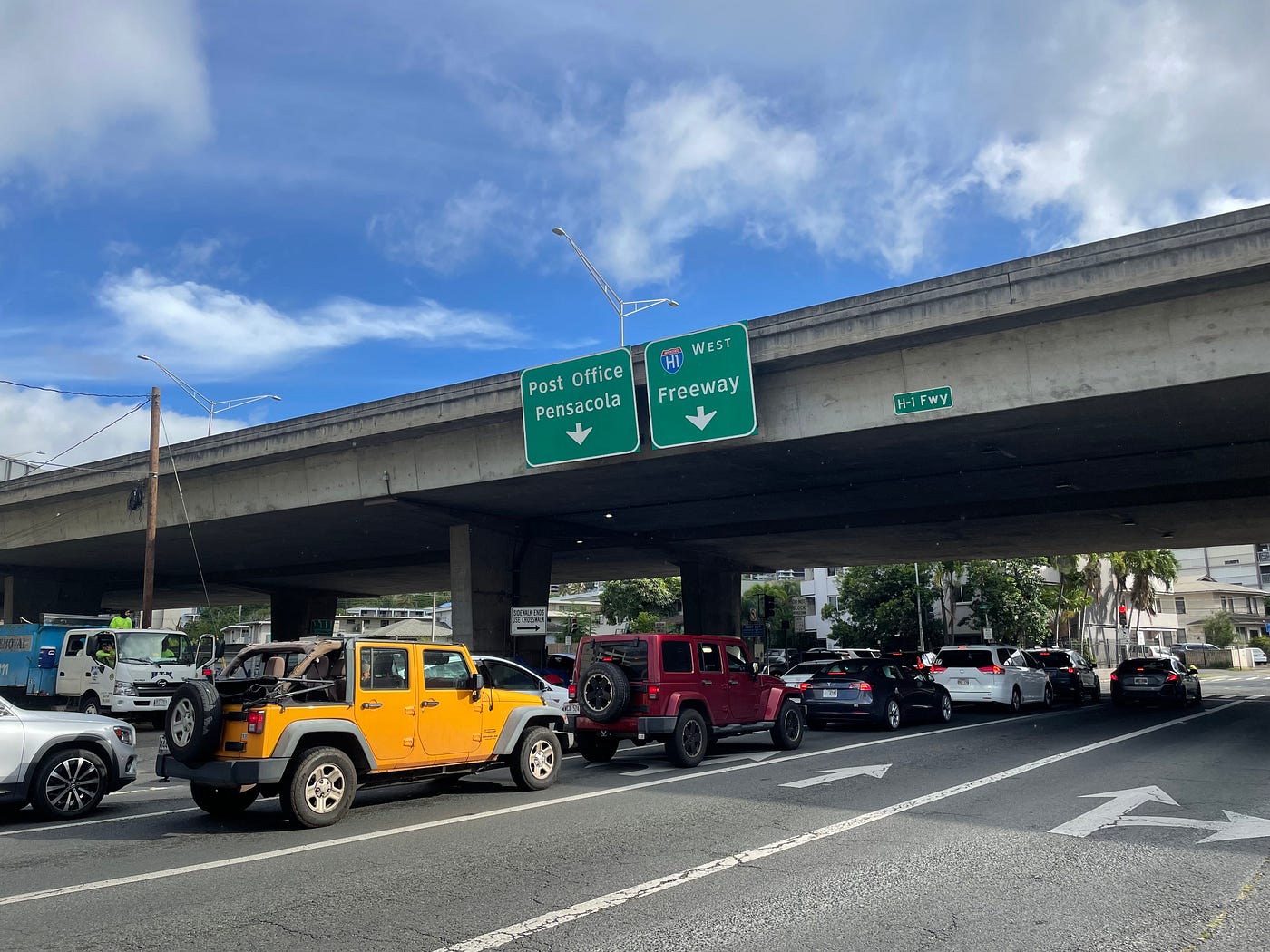
First off, it’s very hard to see the H-1 “freeway” ahead of you as the bright sun bears down on the black pavement and its radiant heat hovers in smog above the long line of red taillights on the four lanes ahead.
There’s a combination of cars, from hefty Honda pickups with surfboards hanging out the bed, small sedans carrying schoolchildren, a plethora of souped-up Teslas (mostly red and white), and even a few cybertrucks, that to me look more suited for the moon than the highway.
The people inside these vehicles vary too.
Tourists en route back to their hotels in Waikiki after exploring the island’s white sandy beaches mix with women and men going home from their office jobs in the urban outskirts of the city, along with service workers, real estate agents, teachers, electricians, plumbers, journalists — almost everyone opts for their own car on the road.
Some are smarter than others and take The Bus, but many of those people would presumably concede they only do so because it’s too expensive to own a car.
Honolulu’s Limited Public Transportation Options
Suah Cho, a 27-year-old reporter at the local paper Honolulu Civil Beat, takes two buses each day to get to her office in Kaimuki from her condo in Waikiki. A trip that would usually take about 20 minutes takes her over an hour each way.
To make matters worse, she says the busses are often late, and she’s forced to stand outside in the sun while waiting for them to pick her up. In fact, the heat can easily range up to the high 90s, a sweaty feeling made worse by the excessive amount of pavement surrounding her stops.
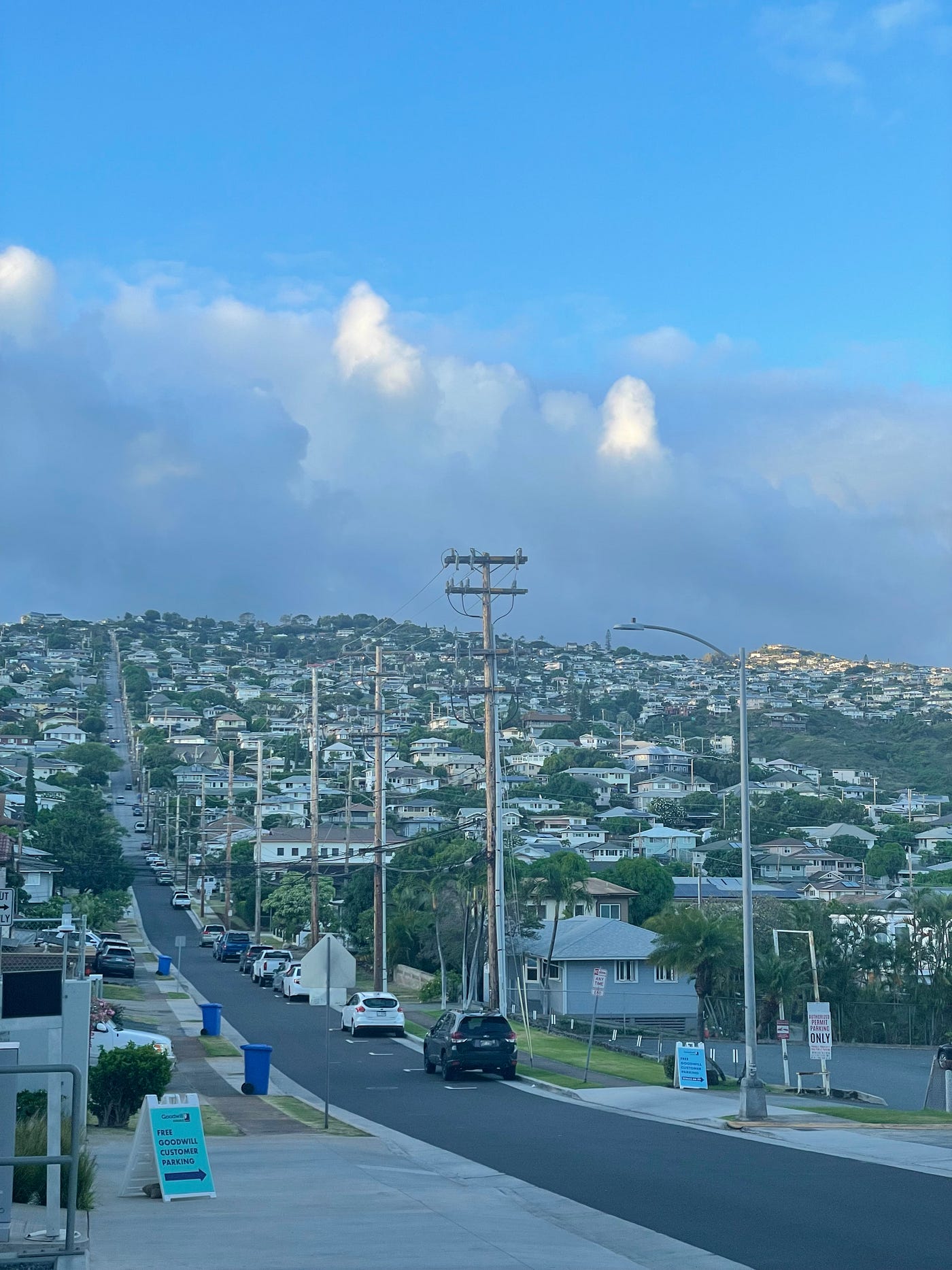
In New York City, transportation officials recently announced an effort to build more bus-stop coverings for people who lounge in the summer heat or pouring rain while waiting for their mass transportation to arrive. Maybe Honolulu should take notes.
Public transportation is undoubtedly an issue in Hawaii. A rail project has stalled for years due to labor disputes, and the original planned route to connect rural towns to Honolulu, where many jobs, activities, community centers, and premier resources are located, has been shortened due to insufficient government funding.
Despite the limited options forcing many commuters into traffic, you won’t find the same “road rage” in Hawaii that you find in New York City or the notorious bumper-to-bumper traffic that clogs up Los Angeles.
Hawaiians are famous for their manners on the road. People who live on the islands very rarely honk. When someone does feel the need to bump the center of their steering wheel, it’s usually due to a faulty taillight or the car ahead forgetting to turn on its lights at night.
How Does Honolulu’s Public Transportation Stand Against Other Major Cities?
Originally from Seoul, South Korea, Cho misses her speedy and easy-to-navigate metro system back home.
Serving nearly 2.5 billion people each year, the Korean subway system spans nearly 200 miles. Some of the favored features are the many signs for passengers to quickly and efficiently find their next line, as well as luxuries like Wi-Fi. Some cars even have heated seats for Seoul’s cold winter nights.
It’s no surprise that the subway consistently ranks among the top transportation services in the world.
While expanding the budget for the stalled railway on Oahu seems out of the question at the moment, at least we can be at peace knowing others are in the same boat.
So, the next time you find yourself frustrated by the slow-moving line in front of you, let the person with their blinker on pass. When the person waves a hand in thanks, it’ll leave you feeling warm and fuzzy your whole ride home.
 ashley elizabeth miller
Please leave your thoughts!