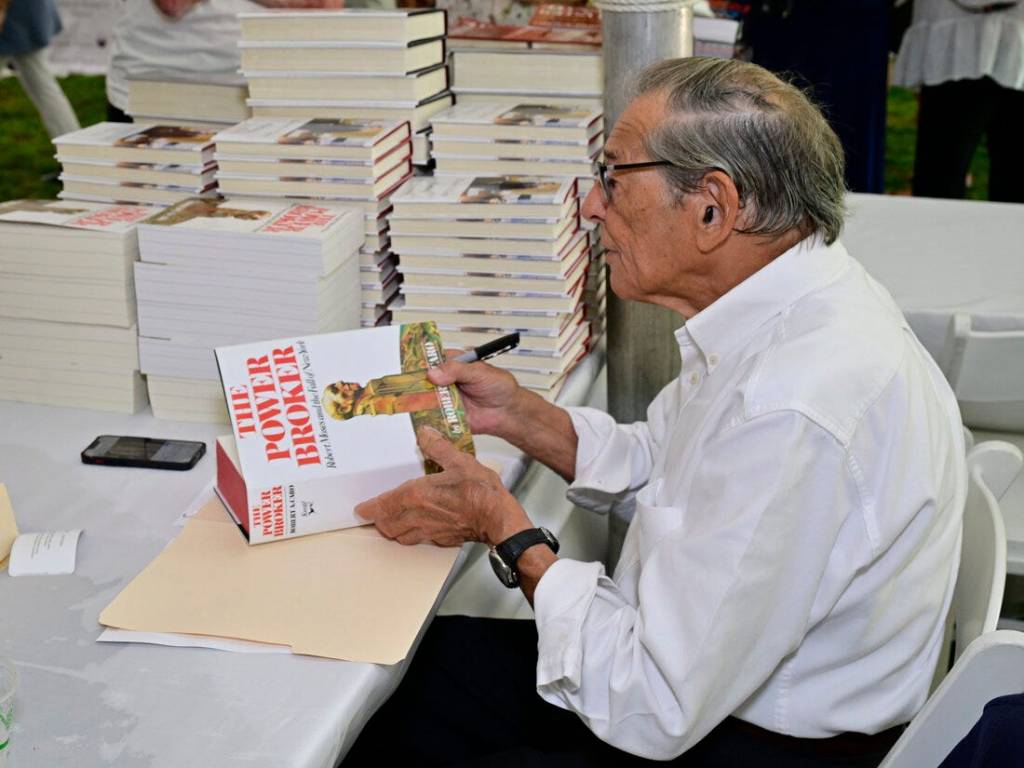
Robert Caro spent seven years on The Power Broker — a 1,246-page tome tracing the rise of the man, myth, legend who shaped New York City: Robert Moses.
In the 1960s, as a reporter for Newsday, Caro and his peers recognized Moses as a bigwig in New York’s Democratic machine. They wondered how he got so much power.
“When I was a reporter on Newsday,” said Caro on the 99% Invisible podcast. “You used to type, ‘Robert Moses City Park Commission.’ And it sort of goes through your mind: ‘What does that have to do with the fact that he’s building the Long Island Expressway 80 miles out on to Long Island? It’s not even in New York. And it’s not a park. Who is this guy?’”
While he never held elected office, Moses maneuvered his way into a myriad of roles, including New York City Parks Commissioner, Chairman of the Triborough Bridge and Tunnel Authority, leading the New York State Power Authority, and more.
What Caro needed was time to unpack the web of power spun by Moses so many years before, a wish that was granted when he became a Harvard Nieman Fellow. Caro set off “turning every page” from Moses’ past. His wife Ina assisted in research, and was very good at it, per her proud husband Caro.
Living on a small $5,000 advance, Caro and Ina were barely getting by during those years. On Long Island, Ina switched grocery stores and stopped using the dry cleaner. Only when The New Yorkereventually bought the book did she reveal this to her husband.
In all that time — running on a dream, nearly out of cash, praying someone would read it — do you think Caro’s editor was cheering him on, telling him, You’re gonna be huge!? No. Instead, he lamented: It’s admirable what you’re doing, but no one’s going to read a book on Robert Moses.
“All I heard for all those years was nobody’s going to read a book on Robert Moses,” Caro said.
It’s a good lesson for any writer sacrificing time and money, wondering if it’ll work out while people around them say it won’t: believe in yourself, keep going, and finish. If it flops, it flops. You could be the next Robert Caro.
Now, over 50 years later, The Power Broker is the go-to recommended read for anyone interested in American politics. It came onto my radar as a student at Columbia Journalism School.
My reporting professor, a staff writer at The New Yorker, introduced me to Caro. He also assigned a classic local news story that ties into the story of Moses’ path to power: a public park being sold by the government and a group of citizens trying to stop it.

I wrote a similar story this summer as a reporting intern in Honolulu. A small parcel of public parkland in a neighborhood clogged with traffic and open-air drug use was sold by the city — giving the park’s neighboring landlord, a realtor, a steal of a deal on the valuable real estate. An activist who works with homeless people in the area tried to adopt the space, but it was too late; the city council had already moved ahead.
Six days before Christmas, I wrote another story — this time in a different state, across the country — about a shady state conservation department giving developers the green light to build on land designated as park space. They evaded county oversight and began construction without notifying the small town’s residents. Green, open space and freedom fire people up.
Parks Make Good Politics — Just Ask Gov. Al Smith
Parks are ideas that people of all parties, races, and economic classes can stand behind. Thus, they are a valuable asset for politicians. I’ll build lots of parks! — who could vote against that? Alfred Emanuel Smith, the governor of New York from 1923 to 1928, who gave Moses his first position of power, understood this well.
Moses served under five governors, but Smith was by far his favorite. He was the only one Moses would ever address as “Governor.” The rest were simply addressed by their first names. When Smith ran for president in 1928, he nominated Franklin Delano Roosevelt to be New York’s next governor. Roosevelt won the seat in Albany, but Herbert Hoover crushed Smith in the presidential election, pulling in 444 electoral votes to Smith’s 88. (Some attribute Smith’s loss to America’s anti-Catholic sentiment.)
Roosevelt, a Harvard graduate from upstate New York, campaigned on a promise to continue Smith’s agenda of reform: improving working conditions for women and children, along with other progressive policies rooted in Smith’s youth growing up on the Lower East Side. (Smith had dropped out of school at 13 to start work and support his mother.) But once in power, Roosevelt distanced himself. In his first speech to the press, he ignored Smith’s offers of advice and charted his own course.
The Power Broker’s Lasting Legacy
The book is a living bible for any journalist interested in covering U.S. politics. I’ve learned more in the first 500 pages than I have in any civics or political science course. Maybe that’s not entirely true — but you know what I mean.
Even New York politicians reference the book. Recently, The New York Timesasked the city’s five mayoral candidates for 2025 what they got out of it— assuming they’d all read it. Most gave generic answers, though at least it was clear they’d done the reading. But Eric Adams, the current mayor facing a trove of legal troubles and hoping for exoneration from the incoming president, admitted that while he’d read the book, he had no substantive insights to share with reporters. Hm.
A Different Kind Of Power Broker
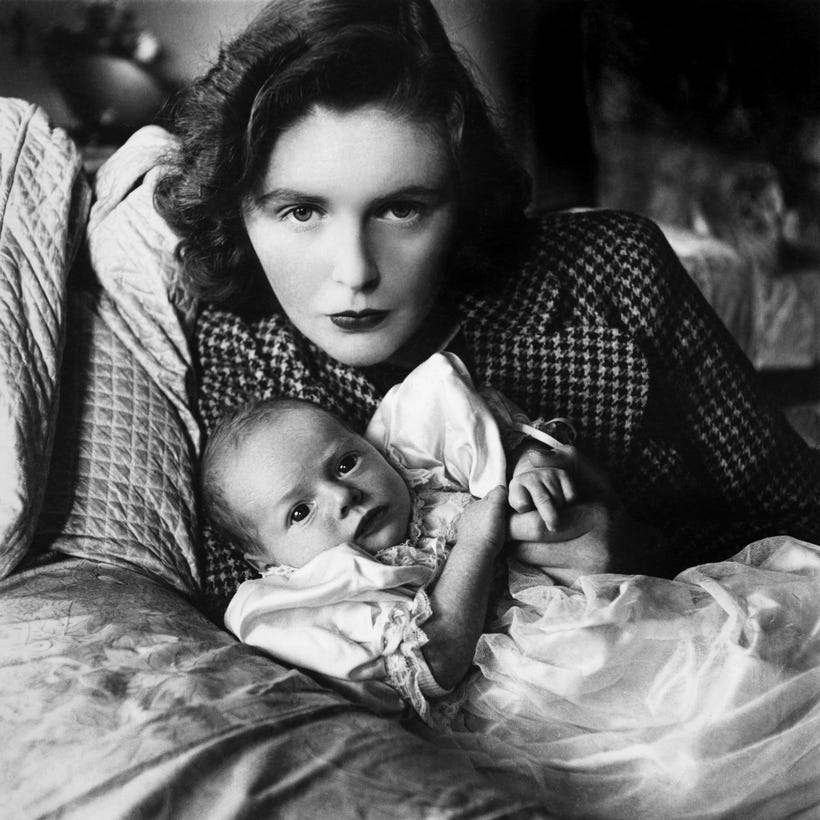
Moses is not the only power broker on my mind.
The Kingmaker by Sally Bedell Smith tells the story of Pamela Harriman Churchill, the daughter-in-law of Winston Churchill. She bore his grandson at the outset of World War II and played an instrumental role in getting the U.S. to join the war effort — saving Britain from complete economic turmoil. Churchill is certainly a more likable, relatable, and sympathetic power broker than Moses.
P.S. While I’d never listen to The Power Broker — I value reading the words and following Caro’s train-of-thought writing style — The Kingmaker has a fantastic audiobook, read by a woman who sounds exactly how I imagine Pamela did. It was recommended to me, and now I’m recommending it to you.
 ashley elizabeth miller
Please leave your thoughts!