The police in New York City
They chased a boy through Central Park
In a case of mistaken identity
They shot a bullet through his heart

— Mick Jagger and Keith Richards, "Heartbreaker" (1973)
Saxophones, synthesizers, booming bass—energy, adrenaline, sex, drugs, rock & roll.
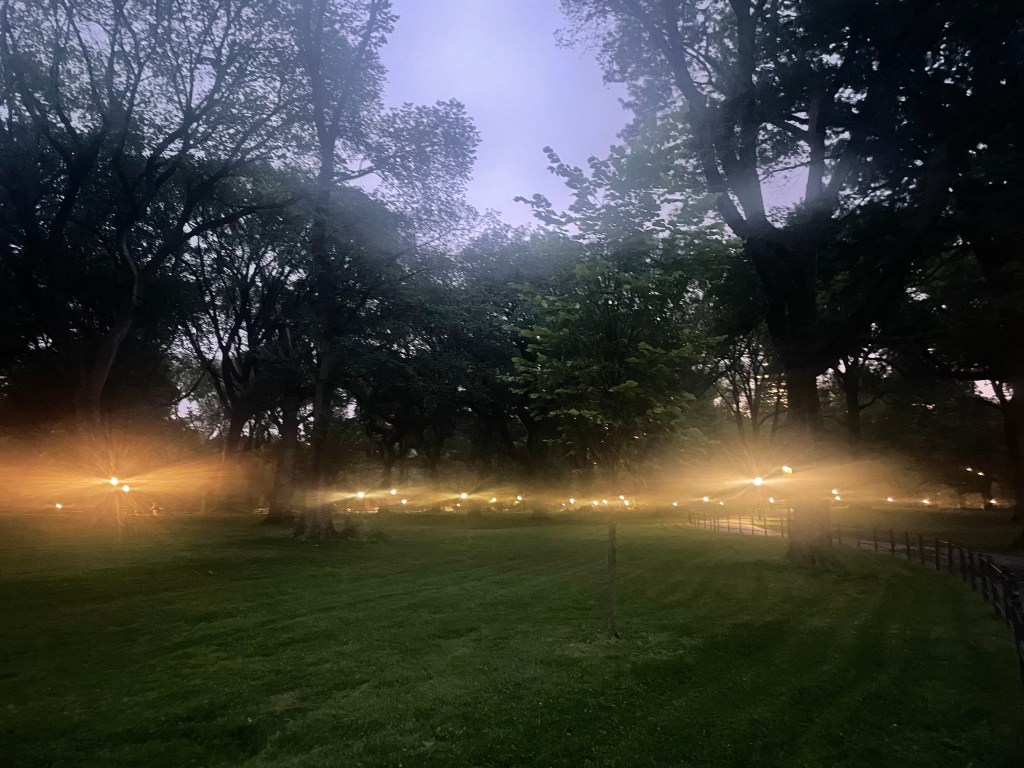
“Doo, Doo, Doo, Doo (Heartbreaker),” one of my favorite Rolling Stones songs off their 1973 album, Goats Head Soup, rang in my mind on an evening stroll through Central Park early this summer.
What a privilege to meander along in peace, I thought, unafraid of a cop nailing me in the back with a bullet. Or accusing me of a crime I did not commit.
As a white woman with financial support to live in Manhattan, I am not afraid of the police—nor am I fearful of New Yorkers of color, whom the NYPD has historically targeted (and viewed to be “The Other”).
Nearly twenty years after the Stones song was released, in 1989, five Black teens were forced to confess to a rape of a woman in Central Park they never met. Onlookers were furious about the allegations—no more so than Donald Trump, who took out ads in The Post and The Times advocating for the reinstatement of the death penalty.
There were some 3,245 rapes in New York City that year—but only one rose to national attention. Why? She was a young white woman. The police thus had pressure to find someone to blame—and instead of nabbing just one placeholder from the hood, they imprisoned five kids.
All five were sent to prison—and only released when the true assailant revealed himself to police in 2002. Nearly twelve years after that, the Exonerated Five sued for emotional distress, among other claims, and won forty-one million dollars from the city.
To me, the fee seems low. And no amount of money can appease the toll on one’s soul for being stolen from society—and made out to be a viscous rapist in front of the entire nation. Not to mention make up for lost time.
You’d think the NYPD might change after all this time—but injustices like this persist.
Fifteen years ago, Kalief Browder, a sixteen-year-old high school student, was arrested for stealing a backpack—a crime he did not commit—and sent to await trial in Rikers. He was locked behind bars for three years for, I’ll say again, a crime he did not commit.
One year after his release, Browder took his own life.
Violence traverses decades. As does hope—in an artist’s heart for a better tomorrow.
“Doo, Doo, Doo, Doo (Heartbreaker)”
The police in New York City
They chased a boy through Central Park
In a case of mistaken identity
They shot a bullet in his heart
Heartbreakers with your forty-four
I wanna tear your world apart
You’re a heartbreaker with your forty-four
I wanna tear your world apart

A ten-year-old girl on a street corner
Sticking needles in her arm
She died in the dirt of an alleyway
Her mother said she had no chance, no chance!

Heartbreaker, heartbreaker
She stuck the pins right in her heart
Heartbreaker, a pain maker
Stole the love right out your heart
 ashley elizabeth miller
Please leave your thoughts!